Ants in the Kitchen in Evansville: What Causes Them and How to Stop Them
Finding ants in your kitchen is frustrating, especially when they seem to appear out of nowhere. One day the counters are clear, and the next day there is a tiny marching band headed straight for a crumb you did not even know existed. Around Evansville, ants are a common problem for homeowners, especially during warmer months and after changes in weather.

While a few ants may not seem like a big deal, kitchen ant problems can grow quickly. Ants are excellent at finding food and water, and once they establish a trail, more ants can follow. The key to stopping ants is understanding what is attracting them, where they are coming from, and how to prevent them from returning.
Why Ants Are Showing Up in Evansville Kitchens
Ants enter homes looking for food, water, and shelter. Kitchens provide all three, which makes them one of the most common places to find ant activity.
Common reasons ants show up in kitchens include:
Crumbs on counters, floors, or under appliances
Spills or sticky residue from drinks and food
Open pantry items
Pet food left out overnight
Trash cans without tight-fitting lids
Moisture around sinks, dishwashers, or plumbing
Gaps around windows, doors, or utility lines
Outdoor colonies close to the foundation
Ants do not need much to survive. A few crumbs, a drop of syrup, or a small plumbing leak can be enough to attract them.
Common Kitchen Ant Attractants
Even clean homes can have ant problems. Ants are small, persistent, and very good at finding hidden food sources.
Food Crumbs and Spills
Ants are drawn to sweets, grease, proteins, and crumbs. They may feed on sugar, cereal, fruit, bread, pet food, grease around the stove, or food residue under appliances.
Areas that often attract ants include:
Countertops
Pantry shelves
Under the stove
Under the refrigerator
Around the dishwasher
Trash cans
Pet food bowls
Kitchen floors and baseboards
A kitchen may look clean at a glance, but ants can find the tiny crumbs homeowners miss.
Moisture Near Sinks and Appliances
Ants also need water. Moisture around sinks, dishwashers, refrigerators, and plumbing lines can make your kitchen more attractive.
Common moisture sources include:
Leaky faucets
Dripping pipes
Dishwasher leaks
Condensation around appliances
Damp cabinets under the sink
Water left in pet bowls
If ants are consistently showing up near the sink, dishwasher, or under cabinets, moisture may be part of the problem.
Easy Entry Points
Ants can enter through very small openings. Once they find a food source, they leave a scent trail that helps other ants follow the same path.
Common entry points include:
Cracks around windows
Gaps under doors
Openings around pipes
Foundation cracks
Utility line openings
Gaps around siding or trim
Spaces around cabinets and baseboards
This is why wiping up visible ants may not solve the issue. If the entry point and trail are still active, more ants can show up.
Why Ant Trails Keep Coming Back
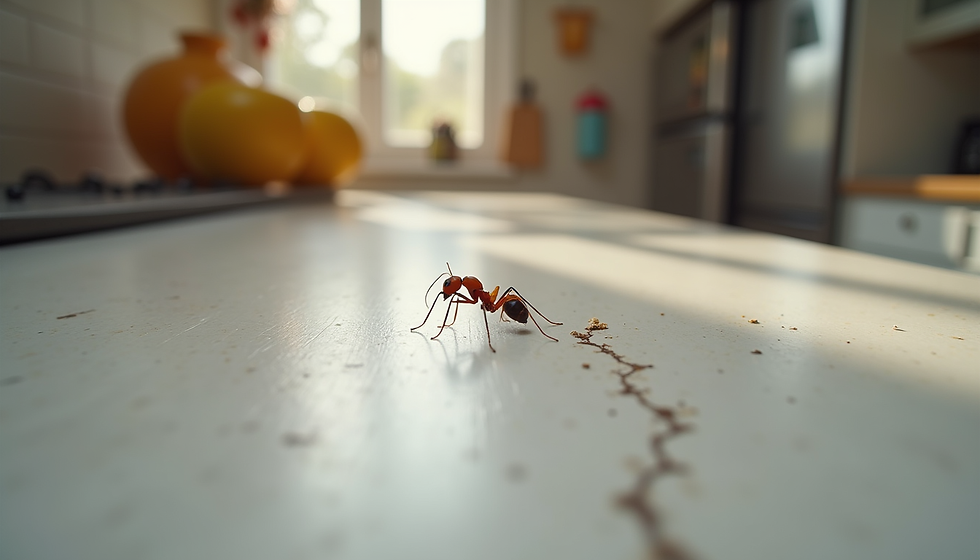
Ants communicate using scent trails. When one ant finds food, it leaves a chemical trail for the rest of the colony. That is why you often see ants moving in a line along baseboards, counters, windowsills, or cabinet edges.
Cleaning the trail can help, but it may not eliminate the colony. If ants are nesting outside near your home or inside a wall void, they can keep sending workers into the kitchen.
That little line of ants is not random. It is basically their version of GPS, and unfortunately, your kitchen is the destination.
Are Kitchen Ants Dangerous?
Most household ants are more of a nuisance than a direct danger, but they can still be a problem. Ants can crawl over trash, drains, outdoor surfaces, and food prep areas. They may contaminate surfaces and pantry items, and some species can bite or cause damage depending on the situation.
The bigger concern is that ant problems can spread if the colony is not addressed. Killing the ants you see may provide temporary relief, but the colony may continue producing more workers.
DIY Ant Control: What Helps and What Does Not
There are a few steps homeowners can take to reduce ant activity, especially when the problem is small.
Helpful DIY steps include:
Wipe counters and food prep surfaces daily
Clean crumbs from floors and under appliances
Store pantry items in sealed containers
Take out trash regularly
Fix moisture issues under sinks and around appliances
Rinse food and drink containers before recycling
Seal obvious gaps around windows, doors, and pipes
Avoid leaving pet food out overnight
However, DIY sprays often only kill the ants you can see. Spraying trails may also cause ants to scatter and form new paths, which can make the problem harder to control.
When to Call a Professional for Ant Control
You should call a professional if ants keep coming back, if you are seeing trails every day, or if you cannot find where they are entering. Professional ant control is also a smart choice when ants are showing up in multiple rooms or when DIY products are not working.
Signs it is time to call YIKES Pest Control include:
Ants keep returning after cleaning
You see trails along counters, cabinets, or baseboards
Ants are entering near windows, doors, or plumbing lines
You suspect a nest inside a wall, crawl space, or foundation area
Ants are appearing in multiple areas of the home
Store-bought sprays are not solving the problem
You want long-term prevention instead of temporary relief
Professional treatment focuses on the colony, entry points, and conditions that are attracting ants.
How Professional Ant Control Works
A professional ant control service starts with an inspection. The goal is to identify the type of ant, locate activity areas, and determine what is drawing them indoors.
Professional ant control may include:
Inspecting the kitchen, exterior, foundation, and nearby nesting areas
Identifying ant trails and entry points
Treating cracks, crevices, and active areas
Using targeted products designed to reach the colony
Addressing moisture or food sources that attract ants
Providing prevention recommendations
Scheduling follow-up service when needed
The right treatment plan depends on the ant species and the location of the colony. That is why a one-size-fits-all spray is rarely the best answer.
How to Help Stop Ants from Coming Back
After treatment, prevention is important. Keeping ants out means making your kitchen less attractive and reducing access points around the home.
To help prevent ants:
Keep counters and floors clean
Store sugar, cereal, snacks, and pet food in sealed containers
Clean under appliances regularly
Repair leaks and moisture problems
Seal gaps around doors, windows, and utility lines
Trim vegetation away from the foundation
Keep mulch, firewood, and debris away from the home
Use trash cans with tight-fitting lids
Schedule routine pest control service for ongoing protection
Small changes can make a big difference, especially when paired with professional treatment.
Call YIKES Pest Control for Ant Control in Evansville
If ants are invading your kitchen, do not wait for the trail to get longer. YIKES Pest Control provides professional ant control in Evansville and surrounding Southern Indiana areas. We inspect the problem, identify what is attracting ants, treat active areas, and help reduce the chance of future infestations.
Whether ants are showing up around your sink, pantry, cabinets, windows, or baseboards, our team can help you get your kitchen back.
Schedule Ant Control in Evansville Today
Ants in the kitchen are annoying, but they do not have to take over your home. Contact YIKES Pest Control today to schedule ant control in Evansville and get help stopping ants at the source.




Comments